What SEQ Sun Does to Car Paint Around Springfield
South East Queensland delivers some of the highest sustained UV and heat loads in mainland Australia. That matters to your car's paint because every hour of unshaded parking is a small dose of the same forces that fade, crack and oxidise clear coat.
The short version
- The RAAF Amberley weather station near Ipswich records a mean maximum of 31.2 degrees in January and 30.9 in December, with the western corridor sitting further from the coast breeze than Brisbane CBD.
- Mean maximum temperature at Amberley stays at or above 27 degrees for seven months of the year, from October through April, so the heat load on a parked car is a three quarter of the year problem rather than a summer one.
- UV radiation breaks the chemical bonds in automotive clear coat, causing oxidation that shows as a chalky, faded finish.
What the Amberley weather station records
The Bureau of Meteorology operates a long-running weather station at RAAF Amberley, station number 040004, about 15 kilometres from Springfield. It has been collecting data since 1941, making it one of the longest continuous records in the Ipswich corridor. According to the BoM's climate averages page for station 040004, the mean daily maximum temperature in January is 31.2 degrees, in December it is 30.9 degrees, and in February it is 30.5 degrees. Those are averages, not peaks. Individual days regularly push well past them.
What makes the western corridor warmer than the coast is distance from Moreton Bay. The sea breeze that cools the eastern suburbs by mid-afternoon weakens the further inland you go. By the time you reach Goodna, Redbank Plains or Augustine Heights, the afternoon temperature can sit two to three degrees above what the Brisbane CBD station records.
The heat load lasts most of the year
The summer figures are the ones people quote, but the useful number is how long the warm season runs. At Amberley the mean daily maximum is 27.9 degrees in October, 29.7 in November, and it is still 27.2 in April. That is seven consecutive months at or above 27 degrees, from October through April. The paint on a car parked outdoors is under meaningful heat and UV load for three quarters of the year, not for one summer.
Only June and July, at 21.7 and 21.4 degrees, offer any real respite, and even then the sun is unobstructed on most days. The practical consequence is that there is no season in which an unprotected car is resting. Protection is either on the paint or it is not, and the clock runs the whole time.
How UV radiation breaks down clear coat
Modern car paint is a layered system. The colour coat sits beneath a clear coat that provides gloss and, importantly, absorbs a portion of the UV radiation before it reaches the pigment. UV photons have enough energy to break the polymer bonds in that clear coat. Over months and years of exposure the surface oxidises, turning chalky and dull. Red and black paints show it first because the pigment absorbs more infrared heat, which accelerates the process. White paint is not immune; it just takes longer to show.
UV is not the same thing as heat
It is worth separating the two forces, because people tend to treat them as one. SunSmart makes the point plainly: UV radiation cannot be seen or felt, and it is not related to temperature. A mild, overcast day in the low twenties can carry a UV level high enough to matter, and most parts of Australia carry high UV all year round. Heat and UV usually arrive together here, which is why the summer figures above are a fair proxy, but the damage to a clear coat does not wait for a hot day.
That has a direct consequence for how you think about winter. A car owner who stops washing and protecting the paint in June because the weather has turned is not pausing the process, only stopping the maintenance of it. The same source notes that surrounding surfaces reflect UV, which is the mechanism behind the lower panel fading described later on.
Contaminants act as a magnifier
Tree sap, bird droppings, brake dust and industrial fallout are not just cosmetic problems. Each one creates a localised chemical reaction on the paint surface. Under the SEQ sun those reactions accelerate. Bird droppings are acidic, and when baked onto a panel in the low thirties the acid etches into the clear coat within hours rather than days. A car that sits in a driveway in Forest Lake under a eucalyptus canopy collects both sap and filtered shade, which is better than full sun but still leaves the sap to cook.
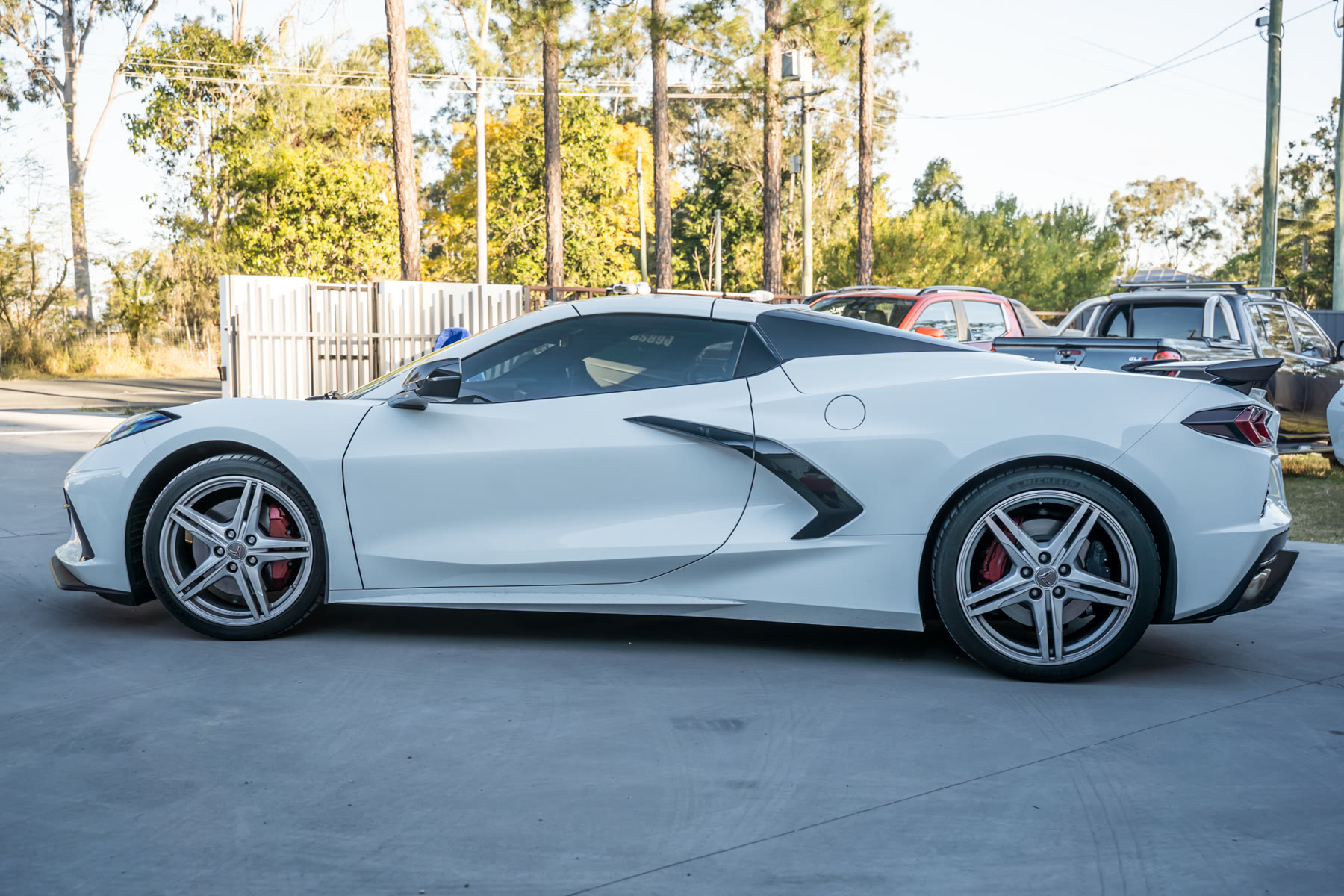
What fading actually looks like up close
Early UV damage is invisible at a glance. The first sign is usually a loss of depth in the reflection. Where a healthy panel reflects a sharp mirror image, an oxidised one reflects a soft, diffused version. The next stage is a chalky texture you can feel by running a finger across the panel. By the time a dark-coloured car looks visibly lighter on the roof and bonnet than on the lower doors, the damage is well established.
Swirl marks make the problem worse. Every circular scratch in the clear coat catches light at a different angle, scattering the reflection. A car with swirl marks under SEQ sun looks hazy even if the paint underneath is sound. That is why a can produce such a dramatic improvement: it levels the surface so the reflection is coherent again.
Roof and bonnet take the worst of it
Horizontal panels face the sun directly. The roof and bonnet receive the highest UV dose per square centimetre because the angle of incidence is closest to perpendicular. A car parked nose-north in a Browns Plains driveway gets full midday sun on the bonnet and roof while the doors sit in partial self-shade from the body. Over years, the difference becomes visible: the horizontal panels fade and the vertical ones hold.
Shade helps, but not as much as people expect, because UV reaches a car in three ways. Direct sunlight is the obvious one. Diffuse sky radiation reaches a car parked in open shade, which is why a vehicle under a shade sail still fades, more slowly. Reflected radiation comes off concrete driveways, light coloured walls and neighbouring vehicles, and it strikes the lower panels that direct sun never touches. A carport reduces the dose substantially. It does not remove it.
Regular washing is the first line of defence
Every contaminant sitting on the paint is a spot where UV damage concentrates. Removing them regularly with a proper wash, not just a rinse with the garden hose, is the single most effective thing you can do to slow UV damage. An exterior wash and protect includes a hand wash, decontamination and a spray sealant that replenishes the UV barrier between full details.
The timing matters. A car washed every fortnight in an SEQ summer accumulates far less baked-on contamination than one washed monthly. The difference is most pronounced on vehicles that park outdoors, which describes the majority of driveways in Greenbank and the newer estates around Augustine Heights where covered parking is not always available.
Where to start
If your car parks outdoors in the Springfield or Ipswich corridor, the most useful first step is a wash and inspection. We can assess the condition of the clear coat, identify any areas where oxidation or etching has started, and recommend the right level of correction and protection. Waddles Detailing is mobile, so the work happens in your driveway. Get in touch to organise a time that suits you.