Car Wash Runoff and Queensland Stormwater Law
Washing a car on a concrete driveway in Springfield or Ipswich sends the rinse water straight to the kerb, into the stormwater drain and out to the nearest creek untreated. In Queensland, that runoff is governed by the Environmental Protection Act 1994, and the penalties are not small.
The short version
- Section 440ZG of Queensland's Environmental Protection Act 1994 makes it an offence to deposit a prescribed water contaminant in or near waters, stormwater drains or roadside gutters.
- Detergents, oil, grease and brake dust in car wash runoff are prescribed water contaminants under the Act.
- The Ipswich City Council water pollution guidance advises residents to wash cars on grass rather than hard surfaces so the soil filters the runoff before it reaches the drain.
- A mobile detailer working in your driveway captures and manages wash water as part of the job, keeping it out of the stormwater system.
What the legislation actually says
Section 440ZG of the Environmental Protection Act 1994 creates an offence for depositing a prescribed water contaminant in or near waters, a roadside gutter, or a stormwater drain. The definition of "prescribed water contaminant" is broad. It covers any substance that would, or could reasonably be expected to, cause environmental harm to waters. Detergents, even biodegradable ones, qualify because they reduce the surface tension of water that aquatic organisms depend on, and they carry dissolved oil and grease from the car's surface into the waterway.
The penalties are structured in two tiers. A person who wilfully deposits a prescribed water contaminant faces a maximum of 1,665 penalty units. At the current Queensland penalty unit rate, that is a significant fine. For a deposit that is not wilful but still occurs, the maximum is 600 penalty units. In practice, councils tend to issue on-the-spot fines or abatement notices before escalating, but the statutory maximum is there.
Who enforces it, and how it usually plays out
The word doing the work in the section is "unlawfully". The offence is depositing a prescribed water contaminant without an authority or other lawful excuse to do so, which is why an industrial site operating under an environmental authority can discharge within its conditions and a household cannot simply decide its driveway is exempt. There is no domestic carve out written into the section for washing a car.
In practice enforcement is complaint driven and sits mostly with local government, which administers the day to day water pollution provisions in its area. A single household washing a car is not what the section was written for, and it is not where council attention goes. The realistic risk to a homeowner is a neighbour complaint about repeated runoff, or a contractor working commercially on a residential street being noticed. That last case is the one worth being clear about: a business washing vehicles in someone else's driveway is operating commercially, and the expectation on it is correspondingly higher.
Stormwater drains are not sewers
The distinction matters because it determines where the water ends up. Sewer systems carry wastewater to treatment plants where it is processed before discharge. Stormwater drains do not. In Forest Lake, Goodna and the newer estates around Augustine Heights, the stormwater network carries whatever enters the kerb directly to local creeks and waterways with no treatment step in between.
A bucket of soapy water poured onto a concrete driveway follows the fall of the concrete to the kerb, then the kerb to the nearest drain grate. From there it enters the pipe network and discharges to the receiving waterway. On a warm day the water evaporates quickly, but the detergent and dissolved contaminants travel with whatever volume reaches the drain.
What is in car wash runoff
The wash water from a single car contains more than soap. Brake dust is a mixture of iron particles, copper, zinc and antimony that accumulates on wheels and lower panels. Road grime includes tyre rubber particles, petroleum residues from the road surface, and fine sediment. Oil and grease from the engine bay and undercarriage dissolve into the wash water. All of these are prescribed water contaminants under the Act.
The concentration matters less than the frequency. One driveway wash from one car is a small volume. But a street of thirty houses where each household washes a car fortnightly is a steady input into a single section of the stormwater network. That is the regulatory logic behind the prohibition: it is the cumulative effect across a catchment, not any individual bucket.
Brake dust is the worst of it
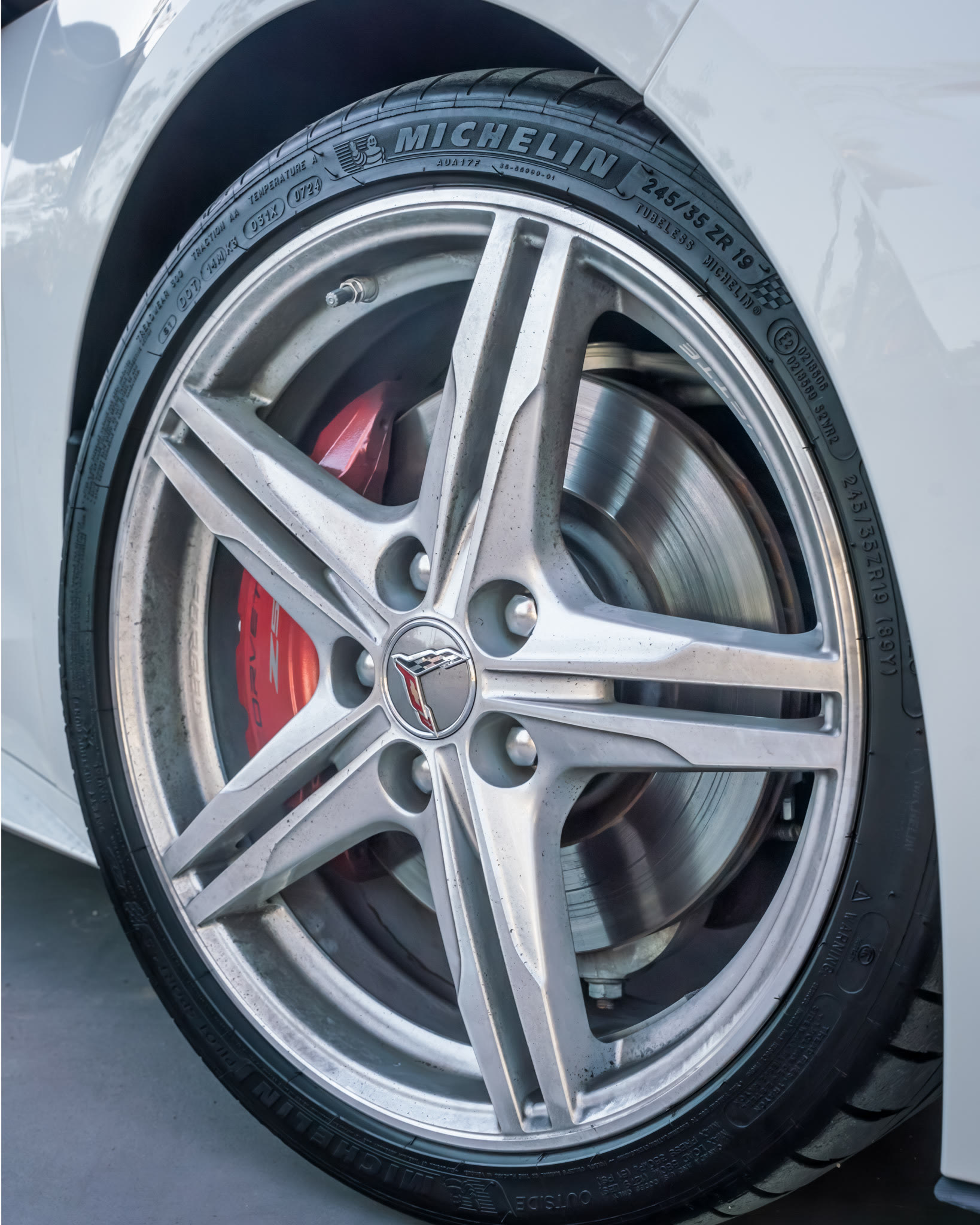
Brake pads shed material every time the brakes are applied. That material is a fine metallic powder that bonds to wheel surfaces and lower body panels. It contains copper, which is harmful to aquatic invertebrates at low concentrations. A single wheel wash removes enough bonded brake dust to visibly colour the rinse water brown. When that water enters the stormwater drain, the copper and iron go with it.
Where the water actually goes after the drain
The stormwater network in the western corridor does not discharge into a treatment works or a holding basin. It discharges into local creeks, and those creeks feed the Bremer and Brisbane river systems. The distance between a driveway in a Springfield estate and an open waterway is usually a few hundred metres of pipe. Whatever goes into the kerb arrives there largely unchanged, because there is no step in between designed to change it.
Newer estates make this more immediate rather than less. A subdivision built with wide concrete driveways, paved entertaining areas and narrow verges has a high proportion of impervious surface, which means a greater share of any water that lands on it runs off instead of soaking in. The drainage is engineered to move that water away quickly, and it does. Speed is the design goal, and filtration is not part of it.
There is also a timing effect that catches people out. The first rain after a dry spell washes the accumulated residue off every hard surface in the catchment at once, so a driveway that was washed three weeks ago still contributes. It is a reason to think about where the wash water goes on the day rather than assuming a dry driveway has forgotten about it.
The council position on driveway washing
Ipswich City Council's water pollution guidance advises residents to wash vehicles on grass rather than concrete or paved surfaces. The reasoning is that soil acts as a natural filter: it traps suspended solids, adsorbs some of the dissolved metals, and prevents the bulk of the rinse water from reaching the kerb. On a grassed area the water soaks in rather than running off.
That advice is practical for a quick garden-hose rinse, but it does not work for a thorough wash. Machine polishing compounds, heavy degreaser and clay bar lubricant should not go into the soil either. A professional detail generates a different category of waste that needs to be captured regardless of the surface.
How a mobile detailer manages wash water
A mobile detailing setup includes containment and recovery as standard equipment. The approach varies by operator, but the principle is the same: prevent the wash water from reaching the stormwater drain. That can mean working on a sealed area with a berm, using a water reclaim mat, or simply controlling the water volume so tightly that there is no meaningful runoff. An exterior detail or an exterior wash and protect done by a professional mobile detailer in your driveway keeps the contaminated water out of the drain by design.
The water volume is also lower than a garden hose wash, which is the part most people do not expect. A pressure washer delivers its cleaning effect through pressure rather than volume, and it is used in short bursts rather than left running between panels. A hose left running through a wash is the single largest source of water on a driveway, and it is the water nobody is actually using. Less water going on means less runoff to manage coming off.
The interior is a separate question
An interior detail generates almost no liquid waste. The cleaning process uses sprayed product wiped with microfibre cloths, and extraction machines that vacuum the dirty water back into a tank. There is nothing to run off the driveway. A full detail that covers both interior and exterior concentrates the water management on the exterior stage and handles the interior with closed-loop equipment.
Practical steps if you wash at home
If you prefer to wash your own car, the simplest change is the surface. Wash on grass rather than concrete. If your only option is a paved driveway, use a bucket rather than a running hose to control the volume, and use as little detergent as possible. Rinse the car over the grass at the side of the driveway rather than letting the water run to the kerb. If the driveway falls towards the street, park the car on the flattest part of it you have, or on the verge if your council allows it, so that gravity is not doing the opposite of what you want.
A few habits make a real difference without any equipment. Sweep the driveway before you start rather than hosing the loose material into the gutter, because dry sweeping keeps sediment out of the drain entirely. Tip the bucket onto the garden at the end instead of down the kerb. Wash the wheels first and, if you can, over a grassed area, since that is where the brake dust and the heaviest contamination come off. None of this makes a driveway wash compliant on its own, but each step keeps a measurable share of the contamination out of the stormwater system.
For anything more involved than a simple wash, such as a the products involved are specialised and should not be entering the stormwater system at all. That is where a mobile detailer adds value beyond the finish: the water is managed as part of the service. Get in touch with Waddles Detailing to organise a detail in your driveway across Springfield, Browns Plains, Redbank Plains or anywhere in our service area.